First-Time Home Buyers in Navarre, Florida
Your straight answer on whether buying makes sense right now.
"We Just Don't Make Enough to Buy Here" Might Not Be True
A lot of first-time home buyers decide the math doesn't work before they've run it. Maybe the credit isn't where you'd like it. Maybe your rent is low enough that giving it up feels risky. Sometimes the numbers say not yet. Often they say you're closer than you think, and the only way to know is to look at your real numbers instead of guessing from a mortgage calculator and closing the tab.
If renting is the better deal for you right now, I'll tell you that, along with what would need to change for buying to make sense. And whether you're a month out or a year or more, it's never too early to start planning. Getting your ducks in a row early gives you time to strengthen your credit, build your savings, and learn what a comfortable payment looks like, so when the right home appears you're ready to move.
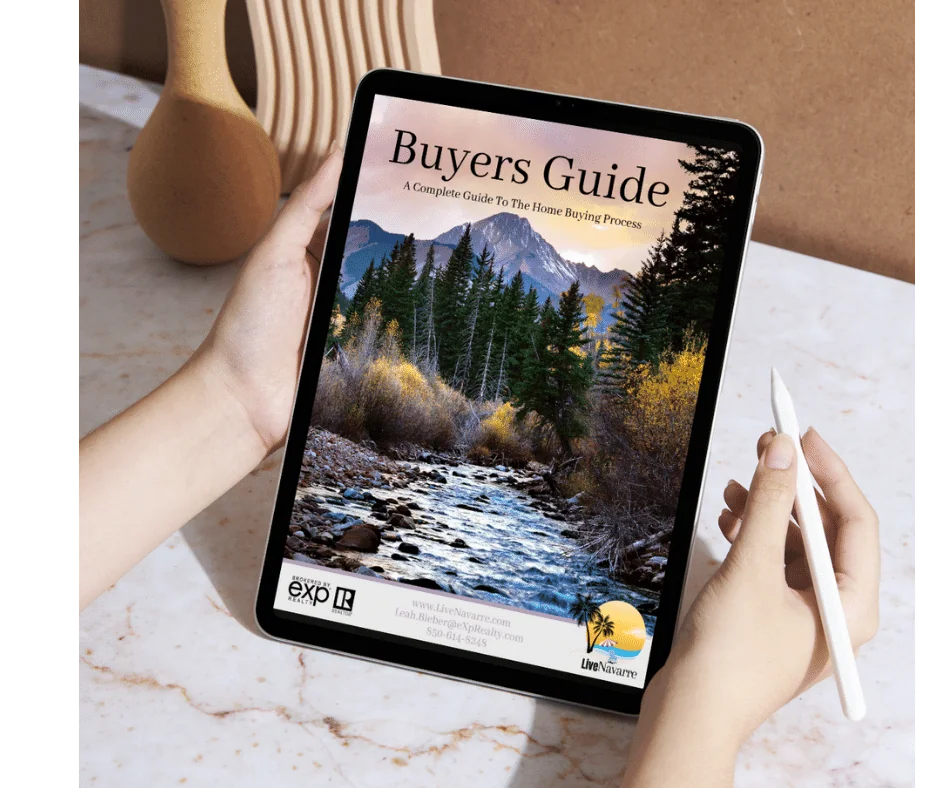
Take the Next Step
Get the Guide or Talk Strategy
Just starting to look around, or ready to make a move? Start with whichever fits.
Book a 15-Minute Discovery Call
Talk through your goals, ask your questions, and leave with a plan for your next move.
Book a 15-Minute Discovery CallWho Counts as a First-Time Home Buyer?
For most first-time home buyer programs, you count as a first-time buyer if you haven't owned your primary residence in the past three years. Owning real estate you don't live in, like a rental property, doesn't automatically rule you out. Program rules vary, and I can confirm how the program you're considering defines it.
If you've served in the military, you may have another option with no down payment. See the VA and military buyer page.
What Buying Really Costs, Beyond the Payment
Your monthly payment is shaped by more than the loan amount. It typically includes principal and interest, property taxes, and homeowners' insurance. Looking at the payment in isolation can be misleading. Looking at it in the context of your real life is what creates confidence, so don't forget ongoing costs like utilities and maintenance.
Insurance is the cost that surprises most people new to Florida. Some policies come with a flood insurance requirement, even for homes outside a flood zone, so get insurance quotes early, before you fall in love with a home. Association fees vary from one community to the next, and condo fees tend to be the largest, so ask for them up front.
Credit and Down Payment: Less Standard Than You Think
Credit requirements vary by loan program, and buyers with lower credit scores may still qualify. If you want to strengthen yours before you buy, the basics do the most: pay every bill on time, every time, and keep your credit card balances under 30% of your limits. A higher score also tends to lower what borrowing costs you, so strengthening it before you buy can pay off.
Down payment requirements vary too. Some programs allow down payments as low as 3%, while others don't require one at all. Down payment assistance programs vary greatly as well. Some are for specific geographic areas, and others are designed for first-time home buyers. You don't have to be low-income to ask about them. As both a Realtor and a licensed mortgage loan originator (NMLS #2668541), I can help you sort through the programs and find the ones that fit your situation. You're under no obligation to use me as your lender, and I'm happy to work with the one you already have. Book a discovery call to start, or see how financing works.
Why Book a Discovery Call, Even If You're Not Ready Yet
A real conversation about where you stand: what you can afford right now, what's holding that number back if it's lower than you hoped, and a plan, in order, for closing the gap.
When you are ready, the process itself doesn't change just because it's your first purchase: pre-approval before you tour, a real conversation about strategy, and someone negotiating price and terms on your side of the table. See how I help you buy for the full walkthrough, written so it makes sense even if you've never done this before.
Frequently Asked Questions
Do I have to put 20% down on a house?
No. The amount you need to put down varies by the loan program you use. Some programs allow for down payments as low as 3%, while others don't require a down payment at all.
Should I avoid private mortgage insurance (PMI)?
Not necessarily. PMI can be helpful for borrowers who want to buy a home sooner. For many programs, you would need to put 20% down in order to avoid PMI, which can create a financial burden and postpone homeownership. Plus, on a conventional loan PMI can usually be removed once you've built up 20% equity in your home. Mortgage insurance on other programs, like FHA, follows different rules, so it's worth looking at how it works for the program you're considering.
Does a higher down payment mean a better interest rate?
Not by itself. Many factors go into determining your interest rate, including your debt-to-income ratio. A higher down payment may improve your chances of getting approved and help you qualify for a more favorable rate, but it is not the only factor.
Do I need a high credit score to buy a home?
Credit score requirements vary by loan program, and buyers with lower scores may still qualify. Where your score matters most is the cost of borrowing: a higher score generally earns a lower interest rate, which lowers your monthly payment and what you pay over the life of the loan.
Is down payment assistance only for low-income buyers?
No. Requirements for down payment assistance programs vary greatly. Some are for specific geographic areas, while others are designed for first-time home buyers. If you aren't considered low-income, that doesn't mean you shouldn't ask about available down payment assistance options. As both a Realtor and a loan officer, I can walk you through what's out there.
Can I buy a home if I have student loan debt?
Often, yes. As long as you have solid, reliable income, are making your monthly student loan payments, and have a debt-to-income ratio of less than 50%, you may still qualify to buy a home.
Do I still count as a first-time buyer if I own a rental property?
Possibly. For most first-time home buyer programs, what matters is that you haven't owned your primary residence in the past three years. Rules vary by program, and I can confirm how the one you're considering defines it.
Should I keep renting instead?
Sometimes renting costs less each month, and I'll tell you if that's true for your numbers. But buying is also one of the best ways to build wealth, because your equity grows while you live in the home. Values rise and fall along the way, which is why how long you stay matters. The people who should usually keep renting are the ones who don't plan to stay long enough for a home to start building wealth for them. Homeownership is within reach for more people than they think, and your real numbers will tell you where you stand.
How much home can I actually afford?
The most useful question isn't the maximum number you could technically qualify for. It's what payment still lets you live your life. As both a Realtor and a loan officer, I can run those numbers with you.
Is now a bad time to buy my first home?
It depends on your specific numbers, not the market headlines. See the latest Navarre market update for real current data, and let's talk through your own situation rather than guessing from a national story.
Keep exploring
Ready to make your move with Live Navarre?